

The Campus Town Project at the University of Seoul is an urban innovation–driven initiative centered on youth entrepreneurship. Its core significance lies in serving as a platform where the university and the local community work together to address urban and youth issues while building a sustainable innovation ecosystem. In particular, the University of Seoul, established and operated by the Seoul Metropolitan Government, is a municipal university that shares the city’s public values and policy direction. It holds both the role and responsibility to make substantial contributions to solving urban-based challenges.
Im-pyeong Lee, Head of the Campus Town Project Board at the University of Seoul, emphasized, “The University of Seoul has an education and research structure specialized in urban-based practical disciplines such as urban science, geoinformatics, environmental engineering, design, and artificial intelligence,” adding, “In fact, the university has integrated education, research, and practice by aligning with various urban policies, regional balance strategies, and technology-based social innovation programs promoted by the Seoul Metropolitan Government.” He added, “This academic identity and community-centered role form a highly coherent structure with the purpose of the Campus Town Project, which aims to serve as an ‘experimental platform connecting the city and youth.’”
Since 2019, the University of Seoul has been participating in the Seoul Metropolitan Government’s ‘Unit-Type’ Campus Town Project, actively experimenting with the establishment of startup spaces, pilot operation of programs, and exchange models with local youth. Building on that operational experience, the university was selected for the ‘Comprehensive-Type’ Campus Town Project in 2022. Since then, it has established a full-scale organizational system and business model, carrying out a wide range of initiatives including startup incubation, investment linkage, and global expansion programs. Director Lee emphasized, “The transition from the Unit-Type to the Comprehensive-Type model marks a major turning point, as it represents not merely an expansion in scale but the establishment of a structural ecosystem where youth entrepreneurship and urban innovation can truly converge.” On September 24, we met Director Lee at the Campus Town Project Board of the University of Seoul in Dongdaemun-gu, Seoul.
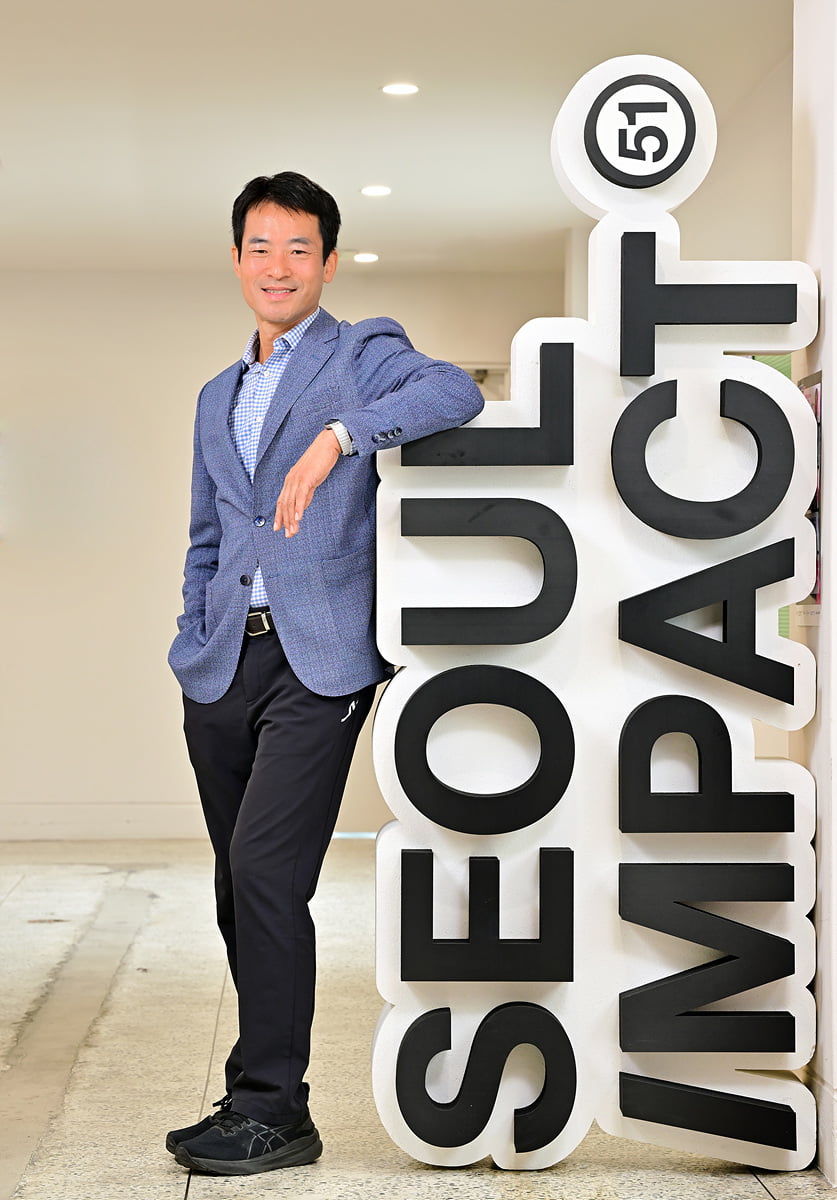
Im-pyeong Lee, Head of the Campus Town Project Board at the University of Seoul
Head of the Campus Town Project Board at the University of Seoul (2022~present)
Professor, Department of Geoinformatics, College of Urban Sciences, University of Seoul (2003~present)
Director, Urban Unmanned Vehicle Research Center, Institute of Urban Science, University of Seoul (2016~present)
CEO, Innopam Co., Ltd., Research Lab-based Venture (2014~present)
Head of the Start-up Support Foundation at the University of Seoul (2021~2024)
Director, AI Complexity Research Center, Urban Science Big Data & AI Research Institute, University of Seoul (2020~2022)
Director, Center for University-Industry Cooperation for SMEs, Industry-Academia Cooperation Foundation, University of Seoul (2019~2021)
Postdoctoral Researcher, Byrd Polar Research Center, The Ohio State University, USA (2002~2003)
Researcher and Senior Researcher, Satellite Technology Research Center (SaTReC), KAIST (1992~1999)
Ph D in Geodetic Science and Surveying, The Ohio State University, USA (1999~2002)
M Sc in Astronautics and Satellite Communications, University of London, UK (1991~1992)
B Sc in Electrical and Electronic Engineering, KAIST (1988~1991)
Please introduce the Campus Town Project Board at the University of Seoul.
“The Campus Town Project Board has established a systematic support program tailored to each stage of a startup’s lifecycle, including customized space and funding support, professional mentoring, linkage to government support programs, investment IR, and global expansion assistance. Through these initiatives, we provide an environment where various entrepreneurial actors, such as students, graduates, and professors, can bring their products and services to life in the real market and achieve tangible results. Above all, the Campus Town Project at the University of Seoul is closely aligned with the university’s mid- to long-term development strategy, ‘Innovation 2030+.’ In ‘Innovation 2030+,’ the University of Seoul presents key strategies such as fostering creative and convergent talent for solving urban issues, strengthening practice-based education, and expanding public partnerships to realize social values. The Campus Town Project serves as a representative platform through which these strategies are put into concrete action. In this way, the university’s institutional relationship with the Seoul Metropolitan Government, its academic structure specialized in urban issues, and its educational philosophy aimed at realizing public value through entrepreneurship are all interconnected. Through the Campus Town Project, the University of Seoul seeks to establish itself not merely as a hub for youth entrepreneurship but as a practical base for achieving urban innovation.”

How would you evaluate the results so far?
“Since its transition to the Comprehensive-Type project in 2022, the Campus Town Project Board at the University of Seoul has consistently received excellent evaluations in the official annual performance assessments conducted by the Seoul Metropolitan Government. In particular, based on the 2024 project performance, the 2025 evaluation awarded the Campus Town Project Board the highest rating of A+. Among the 27 universities that participated in the assessment, it was also recognized by the Seoul Metropolitan Government as ‘one of the most outstanding Campus Town Project Boards in performance’ among the seven universities that received an A+ rating. These achievements are not merely the result of quantitative performance. I believe these results stem from the overall structural completeness and execution power of the startup ecosystem operated by the Campus Town Project Board at the University of Seoul, as well as from the coherence of the philosophy and strategy embedded within it.
To begin with, even in terms of quantitative outcomes, in 2024 alone, the total sales recorded by the incubation companies reached approximately 12 billion KRW, the total investment attracted amounted to 7.1 billion KRW (18 cases), and the total funding secured through government support projects reached 10.4 billion KRW (54 cases). In addition, the project achieved 342 new jobs created and 142 registered intellectual property rights. The survival rate of startups exceeded 90%, the government project selection rate reached 62%, and the business conversion rate was 83%, far surpassing the national average.
However, the true strength lies in the operational strategy that supports these outcomes. Our project board operates a ‘Performance Management Card’ system for all incubation companies, monitoring key indicators such as employment, sales, investment, and patents on a quarterly basis. Based on this system, we hold an annual ‘Performance Sharing Conference,’ where outstanding companies are selected through both quantitative and qualitative evaluations, followed by official awards and linked incentives. This approach does not merely track short-term achievements but functions as a framework that fosters and manages the sustainable growth of companies. In terms of qualitative evaluation, the connection with the local community has been an important assessment factor. Notably, in 2024, the ‘Happy Hyundai Market Playground’ program, carried out in collaboration with the Dapsimni Hyundai Market in Dongdaemun-gu, served as a representative example. The program attracted over 3,500 participants and contributed to an increase of approximately 50 million KRW in sales for local small business owners. This case was officially included in the Seoul Metropolitan Government’s best practices report and was recognized as a model that demonstrated the potential of a community-collaborative startup platform.
Also, our project board has consistently maintained an on-campus startup ratio exceeding the 30% standard recommended by the Seoul Metropolitan Government. The composition is also well balanced between U-LAB startups led by the University of Seoul’s enrolled students, graduates, and faculty members, and student-centered pre-startup teams. In addition, programs such as ‘Crossroads,’ where international students and Korean youth form teams to take on the global market, ‘Global Investment Era,’ which conducts IR sessions targeting global investors, and ‘Seoul Impact Day,’ organized in collaboration with private accelerators and venture capital firms, are recognized as some of the most pioneering and performance-driven models among all Campus Town Projects in Seoul.
In the end, the reason the Campus Town Project Board at the University of Seoul was recognized not only with an A+ rating but also as one of the top-performing project boards lies not merely in operating excellent programs, but in its ability to integratively connect the university’s vision, regional challenges, and youth capabilities, and translate them into a structured execution strategy. We designed our projects based on that philosophy, and since the results were reflected in tangible figures and real-world cases, I believe this was a key factor in achieving high evaluation scores. This consistency, execution capability, and experience in operating programs in a ‘result-oriented manner’ will continue to serve as the key driving force for the ongoing growth of our Campus Town Project Board.”
You have been selected for the 2026 Campus Town (RISE Project). What would you say was the key to this achievement?
“The Seoul Metropolitan Government plans to launch a new Campus Town Project starting in 2026, which will be carried out in connection with the newly introduced RISE (Regional Innovation System & Education) initiative. RISE is a policy that transfers the authority for university financial support from the central government to local governments, allowing them to innovate universities and strengthen the startup ecosystem in line with regional characteristics and development strategies. It also supports universities in establishing themselves as key players in startup support. Starting with the project announcement on June 30, the open call was conducted over a period of about two months, and a total of 13 universities, including the University of Seoul, were finally selected. This project will be operated for an initial period of two years, with the possibility of a two-year extension following a mid-term evaluation, and an annual budget of approximately 1.2 billion KRW will be provided. In addition, more advanced requirements are being introduced, such as the proportion of AI-based startup incubation, the on-campus startup ratio, linkage with RISE projects, expansion of startup spaces, and strategies for startup independence. Therefore, this project should be approached not as a simple extension but as an evolving, next-stage model.
In response, our project board carried out a wide range of preparations in line with the Seoul Metropolitan Government’s application schedule, including systematic performance review, strategic planning, space expansion plans, and governance restructuring. Recognizing the growing importance of organizational support and budget responsiveness within the university, we coordinated efforts to ensure active collaboration and policy commitment at the institutional level. We did not view this new project application as merely an opportunity to continue our existing efforts. Rather, we approached it proactively, seeing it as a crucial turning point to demonstrate how our university will lead youth entrepreneurship and regional innovation based on the foundation we have built so far, and how we will establish the structural foundation and strategic determination necessary to drive the youth startup ecosystem.
Above all, the Campus Town Project is perfectly aligned with the university’s mid- to long-term development strategy, particularly the key directions outlined in ‘Innovation 2030+,’ which focus on fostering creative and convergent talent for solving urban issues, promoting practical social contribution, and building a platform for youth development. The Campus Town Project has served as an experimental ground for bridging the previously disconnected links among education, research, practice, and the local community, and I believe it will continue to function as one of the core assets of the University of Seoul.”

How are the incubation companies selected?
“The Campus Town Project Board at the University of Seoul has designed and operates a program with a step-by-step support system that enables young entrepreneurs to achieve tangible growth throughout the entire process, from deciding to start a business and preparing for it to entering the market and scaling their ventures. This system is largely composed of three stages. It follows a continuous and organic structure consisting of three main stages: first, the pre-incubation stage (discovery and selection), second, the incubation stage (nurturing and support), and third, the post-graduation stage (expansion and networking).
In the pre-incubation stage, outstanding startup teams are publicly recruited through the annual ‘Chang’ Start-up Competition held every March or April. Anyone who meets the criteria of being under 39 years of age and operating a business for less than seven years (or being a prospective entrepreneur) is eligible to apply. If a current University of Seoul student participates as a representative or co-founder, additional points are awarded during the document screening and IR pitching stages, and after selection, they also receive priority access to on-campus startup spaces (SI CORE, Startup Lounge, etc.). This competition is not merely a procedure for allocating startup spaces but a structured process that discovers various types of early-stage startup teams, including prospective entrepreneurs, technology-based founders, and research lab startups, through a rigorous evaluation process consisting of document screening and IR pitching presentations. Each year, approximately 60 to 80 teams are selected, and the selected teams receive startup workspace along with up to 5 million KRW in startup support funding per team. At this stage, we apply a systematic evaluation and selection process to ensure that startup teams with feasibility and strong execution capabilities are brought into the program.”

What are some of the representative startup incubation programs?
“When selected as an incubation company under the University of Seoul’s Campus Town Project, each startup is connected to a variety of customized programs tailored to its specific growth stage after moving in. One of the representative programs, ‘Impact Consulting,’ is an eight-week intensive program designed to enhance business plans and support selection for government funding programs. It provides one-on-one consulting, IR pitching training, and visual material redesign based on individual company assessments. This program has evolved beyond short-term mentoring to become an advanced initiative that leads to tangible outcomes, such as improved selection rates in government support programs.
Additionally, ‘Impact Learning & Mentoring’ is offered year-round for early-stage startups, providing integrated support that combines expert training in various fields with practical, hands-on mentoring. In 2024, more than 60 companies participated in the training, over 40 received follow-up mentoring, and the participants’ satisfaction level exceeded an average score of 90, demonstrating strong qualitative outcomes.
In addition to funding support and educational programs, our project board also operates a practical IR platform designed to enhance the investment readiness of participating companies. ‘Seoul Impact Day’ is an event where incubation companies conduct IR pitching sessions before actual investors and receive direct feedback. In 2024, 10 companies participated, resulting in two successful investment contracts. This program is being carried out in collaboration with the Seoul Startup Hub and private accelerators and venture capital firms, aiming to build broader connections within the investment ecosystem, with plans for further expansion in the future. As part of the University of Seoul’s internationalization strategy, there is the ‘Global SI Start-up Crossroads’ program.
The ‘Global SI Start-up Crossroads’ program brings together Korean youth and international students to form teams that take on entrepreneurship education and global business model development conducted in English. We are supporting the development of a global collaboration–based entrepreneurship training platform that goes beyond short-term networking and leads to actual startup execution.
These programs are not single events or one-time support initiatives but are structured step by step according to the actual growth stages of the incubation companies. The structured accelerating system of the University of Seoul’s Campus Town encompasses the entire growth process, from idea generation and business planning to government project selection, IR pitching, global expansion, and post-graduation development and networking — this is the core of the program.
Ultimately, our Campus Town is more than just a startup space. It is an integrated innovation platform designed to help young entrepreneurs survive and thrive in the real market as they go through repeated cycles of challenge, failure, growth, and progress.”

Please also introduce the programs related to the AI field.
“Recently, as interest in the AI field has grown, our project board has also been operating various AI programs in line with the current trends. First, ‘AI SCHOOL’ is a program that offers AI hands-on training and startup hackathons for incubation companies and enrolled students. It aims to strengthen participants’ AI startup capabilities and foster entrepreneurial talent equipped with professional expertise in the fields of AI and big data.
The ‘AI Impact Lab’ is a program that provides AI-specialized incubation companies with integrated AI-focused education and consulting services. We invite distinguished speakers and industry professionals to provide practical guidance for companies, and we plan to offer dedicated support by establishing separate promotional channels to help them carry out active publicity activities.
In addition, for the second half of the year, we are preparing programs such as ‘UOS-AWS AI Agent,’ which provides AI utilization training and certification courses, and the ‘AI Humanoid Colloquium,’ where robotics and AI-based companies share innovation cases and discuss future strategies.”
What programs are available to help companies expand globally?
“For programs supporting the global expansion and business diversification of incubation companies, we have newly established the ‘Global Open Innovation’ program in 2025. This program offers intensive training and mentoring for incubation companies preparing for global expansion, and outstanding participants are given the opportunity to take part in the InnoEX exhibition in Vietnam. Through participation in the exhibition, the companies gained the opportunity to join Qualcomm’s Asia Startup Program and the Global Innovator Exchange (GIX) program of the global accelerator DMZ, achieving tangible outcomes including the signing of nine business agreements with local companies. Starting this year, we plan to gradually expand and implement programs that support the global expansion of our companies.”
What are some notable success stories among the supported or incubated startups?
“The Campus Town Project Board at the University of Seoul has established a startup support system that goes beyond short-term entrepreneurial experiences, encompassing the entire cycle from business formation and market entry to post-graduation independence. As a result, a wide range of participants, including young entrepreneurs, faculty-led research lab startups, and external technology-based companies, have been achieving tangible outcomes and continuing to grow.
One of the most representative examples of student startups is Hustlers. Founded by students of the University of Seoul, the team developed ‘Turning,’ a brain detox app designed to help users overcome smartphone overuse in a game-like way. It has rapidly grown into a content-based startup with over 150,000 users across more than 30 countries worldwide. In 2024, the team achieved a series of milestones, including participation in CES, signing an MOU with Sejeong Academy, selection for the TIPS program, and attracting pre-seed investment. Through the Campus Town IR pitching program at the University of Seoul, they also succeeded in securing external investment, laying the foundation for business expansion.
In particular, at the Sanrio Startup Pitch competition held in Tokyo in March 2025, the team won the Grand Prize, gaining recognition in the global market for its content value, social message, and growth potential. Hustlers is recognized as a representative case that goes beyond being a student startup, proving that a content-based startup can achieve genuine competitiveness on the global stage.
Examples of technology-based startups include MarkNova and Alpaca Networks. MarkNova is an AI-based senior healthcare platform company founded by Professor Choi Hyuk from the Department of Computer Science at the University of Seoul. Through products such as ‘KNOK,’ a biosignal monitoring device for the elderly living alone, and ‘INZI+,’ a cognitive function improvement program, the company provides services to over 100 welfare institutions nationwide. As of May 2025, the company’s cumulative sales have reached 7.06 billion KRW, and it is currently in the process of attracting Series A investment. It has established itself as a representative model of faculty-led research-based entrepreneurship that combines technological capability, public value, and market potential.
Alpaca Networks is an external technology-based company founded by a KAIST graduate. It joined the University of Seoul’s Campus Town, achieved rapid growth, and later graduated from the program. The company has commercialized technology that streamlines server setup, security, and deployment through its DevOps automation platform. It has steadily expanded its business foundation by achieving multiple milestones, including selection for the TIPS program, IR awards, patent registrations, and venture certification. In particular, the case in which a University of Seoul student participated as an intern through the Campus Town’s ‘Youth Startup Practice Class’ and was later hired as a full-time employee exemplifies the value of the Campus Town as a collaborative model where the university and companies work together to discover and nurture talent, going beyond mere startup incubation.
In this way, the Campus Town Project Board at the University of Seoul operates a sophisticated and structured support system that enables entrepreneurs from diverse backgrounds and fields to achieve tangible results. During the incubation period, we provide comprehensive support including customized funding, mentoring, government project linkage, and IR pitching. Even after graduation, we continue to assist through long-term startup ecosystem management systems such as performance-sharing events, follow-up investment connections, and entrepreneurship network building, ensuring that startups do not remain short-term experiences but function as sustainable mechanisms for driving change in the city and society.”
reporter jinho lee
jinho2323@hankyung.com

Im-pyeong Lee, Head of the Campus Town Project Board at the University of Seoul, emphasized, “The University of Seoul has an education and research structure specialized in urban-based practical disciplines such as urban science, geoinformatics, environmental engineering, design, and artificial intelligence,” adding, “In fact, the university has integrated education, research, and practice by aligning with various urban policies, regional balance strategies, and technology-based social innovation programs promoted by the Seoul Metropolitan Government.” He added, “This academic identity and community-centered role form a highly coherent structure with the purpose of the Campus Town Project, which aims to serve as an ‘experimental platform connecting the city and youth.’”
Since 2019, the University of Seoul has been participating in the Seoul Metropolitan Government’s ‘Unit-Type’ Campus Town Project, actively experimenting with the establishment of startup spaces, pilot operation of programs, and exchange models with local youth. Building on that operational experience, the university was selected for the ‘Comprehensive-Type’ Campus Town Project in 2022. Since then, it has established a full-scale organizational system and business model, carrying out a wide range of initiatives including startup incubation, investment linkage, and global expansion programs. Director Lee emphasized, “The transition from the Unit-Type to the Comprehensive-Type model marks a major turning point, as it represents not merely an expansion in scale but the establishment of a structural ecosystem where youth entrepreneurship and urban innovation can truly converge.” On September 24, we met Director Lee at the Campus Town Project Board of the University of Seoul in Dongdaemun-gu, Seoul.
Im-pyeong Lee, Head of the Campus Town Project Board at the University of Seoul
Head of the Campus Town Project Board at the University of Seoul (2022~present)
Professor, Department of Geoinformatics, College of Urban Sciences, University of Seoul (2003~present)
Director, Urban Unmanned Vehicle Research Center, Institute of Urban Science, University of Seoul (2016~present)
CEO, Innopam Co., Ltd., Research Lab-based Venture (2014~present)
Head of the Start-up Support Foundation at the University of Seoul (2021~2024)
Director, AI Complexity Research Center, Urban Science Big Data & AI Research Institute, University of Seoul (2020~2022)
Director, Center for University-Industry Cooperation for SMEs, Industry-Academia Cooperation Foundation, University of Seoul (2019~2021)
Postdoctoral Researcher, Byrd Polar Research Center, The Ohio State University, USA (2002~2003)
Researcher and Senior Researcher, Satellite Technology Research Center (SaTReC), KAIST (1992~1999)
Ph D in Geodetic Science and Surveying, The Ohio State University, USA (1999~2002)
M Sc in Astronautics and Satellite Communications, University of London, UK (1991~1992)
B Sc in Electrical and Electronic Engineering, KAIST (1988~1991)
Please introduce the Campus Town Project Board at the University of Seoul.
“The Campus Town Project Board has established a systematic support program tailored to each stage of a startup’s lifecycle, including customized space and funding support, professional mentoring, linkage to government support programs, investment IR, and global expansion assistance. Through these initiatives, we provide an environment where various entrepreneurial actors, such as students, graduates, and professors, can bring their products and services to life in the real market and achieve tangible results. Above all, the Campus Town Project at the University of Seoul is closely aligned with the university’s mid- to long-term development strategy, ‘Innovation 2030+.’ In ‘Innovation 2030+,’ the University of Seoul presents key strategies such as fostering creative and convergent talent for solving urban issues, strengthening practice-based education, and expanding public partnerships to realize social values. The Campus Town Project serves as a representative platform through which these strategies are put into concrete action. In this way, the university’s institutional relationship with the Seoul Metropolitan Government, its academic structure specialized in urban issues, and its educational philosophy aimed at realizing public value through entrepreneurship are all interconnected. Through the Campus Town Project, the University of Seoul seeks to establish itself not merely as a hub for youth entrepreneurship but as a practical base for achieving urban innovation.”
How would you evaluate the results so far?
“Since its transition to the Comprehensive-Type project in 2022, the Campus Town Project Board at the University of Seoul has consistently received excellent evaluations in the official annual performance assessments conducted by the Seoul Metropolitan Government. In particular, based on the 2024 project performance, the 2025 evaluation awarded the Campus Town Project Board the highest rating of A+. Among the 27 universities that participated in the assessment, it was also recognized by the Seoul Metropolitan Government as ‘one of the most outstanding Campus Town Project Boards in performance’ among the seven universities that received an A+ rating. These achievements are not merely the result of quantitative performance. I believe these results stem from the overall structural completeness and execution power of the startup ecosystem operated by the Campus Town Project Board at the University of Seoul, as well as from the coherence of the philosophy and strategy embedded within it.
To begin with, even in terms of quantitative outcomes, in 2024 alone, the total sales recorded by the incubation companies reached approximately 12 billion KRW, the total investment attracted amounted to 7.1 billion KRW (18 cases), and the total funding secured through government support projects reached 10.4 billion KRW (54 cases). In addition, the project achieved 342 new jobs created and 142 registered intellectual property rights. The survival rate of startups exceeded 90%, the government project selection rate reached 62%, and the business conversion rate was 83%, far surpassing the national average.
However, the true strength lies in the operational strategy that supports these outcomes. Our project board operates a ‘Performance Management Card’ system for all incubation companies, monitoring key indicators such as employment, sales, investment, and patents on a quarterly basis. Based on this system, we hold an annual ‘Performance Sharing Conference,’ where outstanding companies are selected through both quantitative and qualitative evaluations, followed by official awards and linked incentives. This approach does not merely track short-term achievements but functions as a framework that fosters and manages the sustainable growth of companies. In terms of qualitative evaluation, the connection with the local community has been an important assessment factor. Notably, in 2024, the ‘Happy Hyundai Market Playground’ program, carried out in collaboration with the Dapsimni Hyundai Market in Dongdaemun-gu, served as a representative example. The program attracted over 3,500 participants and contributed to an increase of approximately 50 million KRW in sales for local small business owners. This case was officially included in the Seoul Metropolitan Government’s best practices report and was recognized as a model that demonstrated the potential of a community-collaborative startup platform.
Also, our project board has consistently maintained an on-campus startup ratio exceeding the 30% standard recommended by the Seoul Metropolitan Government. The composition is also well balanced between U-LAB startups led by the University of Seoul’s enrolled students, graduates, and faculty members, and student-centered pre-startup teams. In addition, programs such as ‘Crossroads,’ where international students and Korean youth form teams to take on the global market, ‘Global Investment Era,’ which conducts IR sessions targeting global investors, and ‘Seoul Impact Day,’ organized in collaboration with private accelerators and venture capital firms, are recognized as some of the most pioneering and performance-driven models among all Campus Town Projects in Seoul.
In the end, the reason the Campus Town Project Board at the University of Seoul was recognized not only with an A+ rating but also as one of the top-performing project boards lies not merely in operating excellent programs, but in its ability to integratively connect the university’s vision, regional challenges, and youth capabilities, and translate them into a structured execution strategy. We designed our projects based on that philosophy, and since the results were reflected in tangible figures and real-world cases, I believe this was a key factor in achieving high evaluation scores. This consistency, execution capability, and experience in operating programs in a ‘result-oriented manner’ will continue to serve as the key driving force for the ongoing growth of our Campus Town Project Board.”
You have been selected for the 2026 Campus Town (RISE Project). What would you say was the key to this achievement?
“The Seoul Metropolitan Government plans to launch a new Campus Town Project starting in 2026, which will be carried out in connection with the newly introduced RISE (Regional Innovation System & Education) initiative. RISE is a policy that transfers the authority for university financial support from the central government to local governments, allowing them to innovate universities and strengthen the startup ecosystem in line with regional characteristics and development strategies. It also supports universities in establishing themselves as key players in startup support. Starting with the project announcement on June 30, the open call was conducted over a period of about two months, and a total of 13 universities, including the University of Seoul, were finally selected. This project will be operated for an initial period of two years, with the possibility of a two-year extension following a mid-term evaluation, and an annual budget of approximately 1.2 billion KRW will be provided. In addition, more advanced requirements are being introduced, such as the proportion of AI-based startup incubation, the on-campus startup ratio, linkage with RISE projects, expansion of startup spaces, and strategies for startup independence. Therefore, this project should be approached not as a simple extension but as an evolving, next-stage model.
In response, our project board carried out a wide range of preparations in line with the Seoul Metropolitan Government’s application schedule, including systematic performance review, strategic planning, space expansion plans, and governance restructuring. Recognizing the growing importance of organizational support and budget responsiveness within the university, we coordinated efforts to ensure active collaboration and policy commitment at the institutional level. We did not view this new project application as merely an opportunity to continue our existing efforts. Rather, we approached it proactively, seeing it as a crucial turning point to demonstrate how our university will lead youth entrepreneurship and regional innovation based on the foundation we have built so far, and how we will establish the structural foundation and strategic determination necessary to drive the youth startup ecosystem.
Above all, the Campus Town Project is perfectly aligned with the university’s mid- to long-term development strategy, particularly the key directions outlined in ‘Innovation 2030+,’ which focus on fostering creative and convergent talent for solving urban issues, promoting practical social contribution, and building a platform for youth development. The Campus Town Project has served as an experimental ground for bridging the previously disconnected links among education, research, practice, and the local community, and I believe it will continue to function as one of the core assets of the University of Seoul.”
How are the incubation companies selected?
“The Campus Town Project Board at the University of Seoul has designed and operates a program with a step-by-step support system that enables young entrepreneurs to achieve tangible growth throughout the entire process, from deciding to start a business and preparing for it to entering the market and scaling their ventures. This system is largely composed of three stages. It follows a continuous and organic structure consisting of three main stages: first, the pre-incubation stage (discovery and selection), second, the incubation stage (nurturing and support), and third, the post-graduation stage (expansion and networking).
In the pre-incubation stage, outstanding startup teams are publicly recruited through the annual ‘Chang’ Start-up Competition held every March or April. Anyone who meets the criteria of being under 39 years of age and operating a business for less than seven years (or being a prospective entrepreneur) is eligible to apply. If a current University of Seoul student participates as a representative or co-founder, additional points are awarded during the document screening and IR pitching stages, and after selection, they also receive priority access to on-campus startup spaces (SI CORE, Startup Lounge, etc.). This competition is not merely a procedure for allocating startup spaces but a structured process that discovers various types of early-stage startup teams, including prospective entrepreneurs, technology-based founders, and research lab startups, through a rigorous evaluation process consisting of document screening and IR pitching presentations. Each year, approximately 60 to 80 teams are selected, and the selected teams receive startup workspace along with up to 5 million KRW in startup support funding per team. At this stage, we apply a systematic evaluation and selection process to ensure that startup teams with feasibility and strong execution capabilities are brought into the program.”
What are some of the representative startup incubation programs?
“When selected as an incubation company under the University of Seoul’s Campus Town Project, each startup is connected to a variety of customized programs tailored to its specific growth stage after moving in. One of the representative programs, ‘Impact Consulting,’ is an eight-week intensive program designed to enhance business plans and support selection for government funding programs. It provides one-on-one consulting, IR pitching training, and visual material redesign based on individual company assessments. This program has evolved beyond short-term mentoring to become an advanced initiative that leads to tangible outcomes, such as improved selection rates in government support programs.
Additionally, ‘Impact Learning & Mentoring’ is offered year-round for early-stage startups, providing integrated support that combines expert training in various fields with practical, hands-on mentoring. In 2024, more than 60 companies participated in the training, over 40 received follow-up mentoring, and the participants’ satisfaction level exceeded an average score of 90, demonstrating strong qualitative outcomes.
In addition to funding support and educational programs, our project board also operates a practical IR platform designed to enhance the investment readiness of participating companies. ‘Seoul Impact Day’ is an event where incubation companies conduct IR pitching sessions before actual investors and receive direct feedback. In 2024, 10 companies participated, resulting in two successful investment contracts. This program is being carried out in collaboration with the Seoul Startup Hub and private accelerators and venture capital firms, aiming to build broader connections within the investment ecosystem, with plans for further expansion in the future. As part of the University of Seoul’s internationalization strategy, there is the ‘Global SI Start-up Crossroads’ program.
The ‘Global SI Start-up Crossroads’ program brings together Korean youth and international students to form teams that take on entrepreneurship education and global business model development conducted in English. We are supporting the development of a global collaboration–based entrepreneurship training platform that goes beyond short-term networking and leads to actual startup execution.
These programs are not single events or one-time support initiatives but are structured step by step according to the actual growth stages of the incubation companies. The structured accelerating system of the University of Seoul’s Campus Town encompasses the entire growth process, from idea generation and business planning to government project selection, IR pitching, global expansion, and post-graduation development and networking — this is the core of the program.
Ultimately, our Campus Town is more than just a startup space. It is an integrated innovation platform designed to help young entrepreneurs survive and thrive in the real market as they go through repeated cycles of challenge, failure, growth, and progress.”
Please also introduce the programs related to the AI field.
“Recently, as interest in the AI field has grown, our project board has also been operating various AI programs in line with the current trends. First, ‘AI SCHOOL’ is a program that offers AI hands-on training and startup hackathons for incubation companies and enrolled students. It aims to strengthen participants’ AI startup capabilities and foster entrepreneurial talent equipped with professional expertise in the fields of AI and big data.
The ‘AI Impact Lab’ is a program that provides AI-specialized incubation companies with integrated AI-focused education and consulting services. We invite distinguished speakers and industry professionals to provide practical guidance for companies, and we plan to offer dedicated support by establishing separate promotional channels to help them carry out active publicity activities.
In addition, for the second half of the year, we are preparing programs such as ‘UOS-AWS AI Agent,’ which provides AI utilization training and certification courses, and the ‘AI Humanoid Colloquium,’ where robotics and AI-based companies share innovation cases and discuss future strategies.”
What programs are available to help companies expand globally?
“For programs supporting the global expansion and business diversification of incubation companies, we have newly established the ‘Global Open Innovation’ program in 2025. This program offers intensive training and mentoring for incubation companies preparing for global expansion, and outstanding participants are given the opportunity to take part in the InnoEX exhibition in Vietnam. Through participation in the exhibition, the companies gained the opportunity to join Qualcomm’s Asia Startup Program and the Global Innovator Exchange (GIX) program of the global accelerator DMZ, achieving tangible outcomes including the signing of nine business agreements with local companies. Starting this year, we plan to gradually expand and implement programs that support the global expansion of our companies.”
What are some notable success stories among the supported or incubated startups?
“The Campus Town Project Board at the University of Seoul has established a startup support system that goes beyond short-term entrepreneurial experiences, encompassing the entire cycle from business formation and market entry to post-graduation independence. As a result, a wide range of participants, including young entrepreneurs, faculty-led research lab startups, and external technology-based companies, have been achieving tangible outcomes and continuing to grow.
One of the most representative examples of student startups is Hustlers. Founded by students of the University of Seoul, the team developed ‘Turning,’ a brain detox app designed to help users overcome smartphone overuse in a game-like way. It has rapidly grown into a content-based startup with over 150,000 users across more than 30 countries worldwide. In 2024, the team achieved a series of milestones, including participation in CES, signing an MOU with Sejeong Academy, selection for the TIPS program, and attracting pre-seed investment. Through the Campus Town IR pitching program at the University of Seoul, they also succeeded in securing external investment, laying the foundation for business expansion.
In particular, at the Sanrio Startup Pitch competition held in Tokyo in March 2025, the team won the Grand Prize, gaining recognition in the global market for its content value, social message, and growth potential. Hustlers is recognized as a representative case that goes beyond being a student startup, proving that a content-based startup can achieve genuine competitiveness on the global stage.
Examples of technology-based startups include MarkNova and Alpaca Networks. MarkNova is an AI-based senior healthcare platform company founded by Professor Choi Hyuk from the Department of Computer Science at the University of Seoul. Through products such as ‘KNOK,’ a biosignal monitoring device for the elderly living alone, and ‘INZI+,’ a cognitive function improvement program, the company provides services to over 100 welfare institutions nationwide. As of May 2025, the company’s cumulative sales have reached 7.06 billion KRW, and it is currently in the process of attracting Series A investment. It has established itself as a representative model of faculty-led research-based entrepreneurship that combines technological capability, public value, and market potential.
Alpaca Networks is an external technology-based company founded by a KAIST graduate. It joined the University of Seoul’s Campus Town, achieved rapid growth, and later graduated from the program. The company has commercialized technology that streamlines server setup, security, and deployment through its DevOps automation platform. It has steadily expanded its business foundation by achieving multiple milestones, including selection for the TIPS program, IR awards, patent registrations, and venture certification. In particular, the case in which a University of Seoul student participated as an intern through the Campus Town’s ‘Youth Startup Practice Class’ and was later hired as a full-time employee exemplifies the value of the Campus Town as a collaborative model where the university and companies work together to discover and nurture talent, going beyond mere startup incubation.
In this way, the Campus Town Project Board at the University of Seoul operates a sophisticated and structured support system that enables entrepreneurs from diverse backgrounds and fields to achieve tangible results. During the incubation period, we provide comprehensive support including customized funding, mentoring, government project linkage, and IR pitching. Even after graduation, we continue to assist through long-term startup ecosystem management systems such as performance-sharing events, follow-up investment connections, and entrepreneurship network building, ensuring that startups do not remain short-term experiences but function as sustainable mechanisms for driving change in the city and society.”
reporter jinho lee
jinho2323@hankyung.com
관련뉴스