

Seoul National University (SNU) Campus Town supports collaborations between the university and the local community to promote youth entrepreneurship and reinvigorate the local economy. The SNU Campus Town Project Board started with unit-based projects in 2017, and is currently in its ninth year and sixth startup cycle. It serves as a robust forward base for startups and an innovation hub that is leading the development of the startup ecosystem and local community.
Director KANG KEON WOOK of the SNU Campus Town Project Board said, “Based on the world-class R&D infrastructure and global capabilities of SNU, we provide focused support to global deep-tech companies in the fields of AI, robots, bio-health, eco-friendly energy, semiconductors, fintech, and more,” and added, “We continue to help these companies grow after they graduate from the program by providing networking support and access to space in Gwanak S Valley.”
Gwanak S Valley is a startup-focused cluster being developed in the Daehak-dong and Nakseongdae-dong areas with the aim of creating quality jobs and revitalizing the local economy. The ‘S’ carries multiple meanings, including START-UP, STAR, Seoul City, and Seoul National University.
To help promising companies settle in and become more self-reliant, the SNU Campus Town Project Board is strengthening its ties and cooperation with Seoul National University, Gwanak S Valley, and startup support organizations in southwestern Seoul. The board is promoting startup festivals, coalition networking, special startup lectures and seminars, and other collaborative programs with Gwanak S Valley, while also providing support for on-site business consulting, comprehensive IR days, and other collaborative programs in southwestern Seoul.
Director KANG said, “In the future, the Campus Town Project Board will grow along with the local community through its support system that covers the entire startup cycle, from pre-startup to global hidden champion, and establish itself as a hub for bringing Seoul-based startups onto the global stage.” We met with Director KANG on September 5 at the Startup HERE-RO3 center in Gwanak-gu, Seoul.
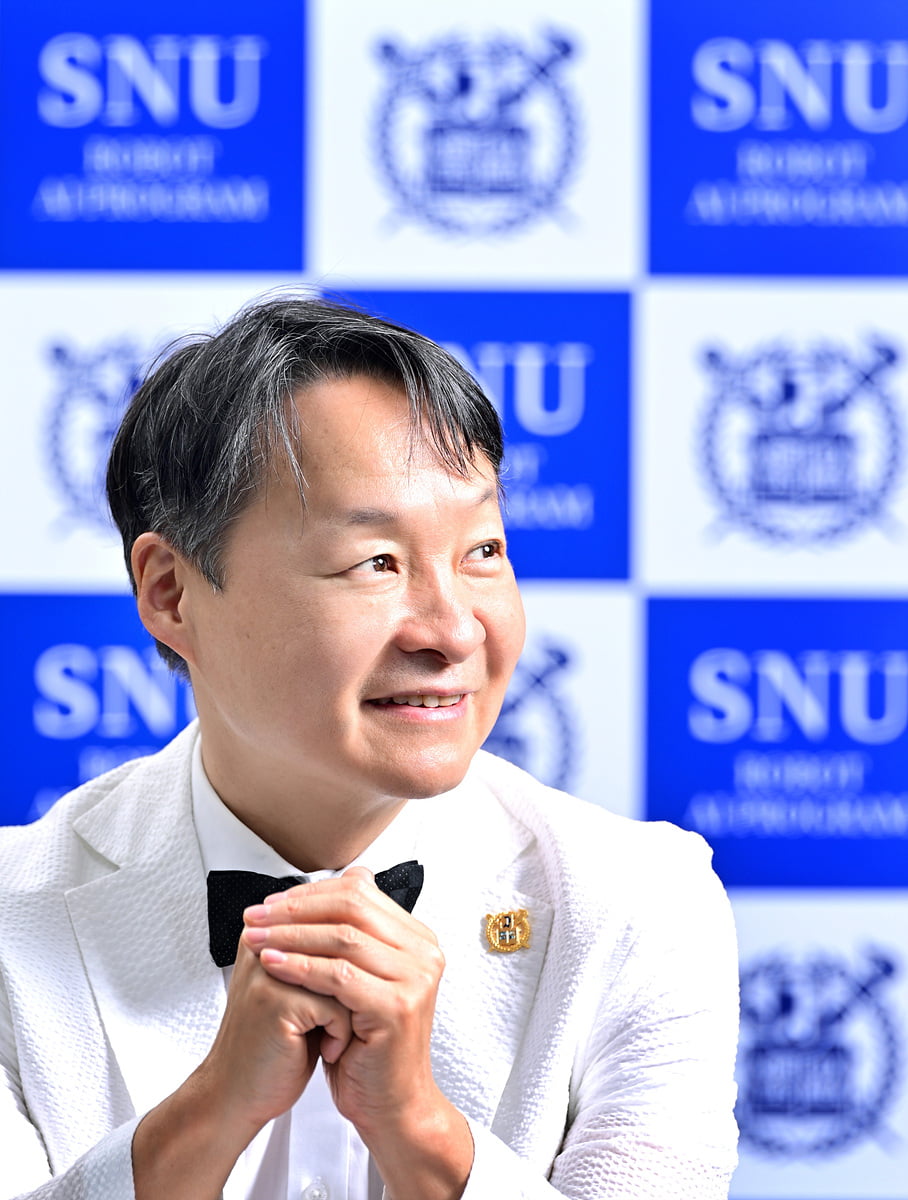
KANG KEON WOOK
Director KANG KEON WOOK of the Seoul National University Campus Town Project Board
Director of the SNU Campus Town Project Board (May 2024 – Present)
Head of the SNU Center for Entrepreneurship & Innovation and Deputy Director of the SNU R&DB Foundation (May 2024 – Present)
Deputy Director of the SNU RISE Board (July 2025 – Present)
Director of the Seoul National University Bio-MAX Institute (Mar 2023 – Feb 2025)
CMO of ClichemBIO Inc. (Nov 2022 – Present)
Head of the Korean Society of Nuclear Medicine (Nov 2022 – Oct 2024)
Director of the Institute of Radiation Medicine at the Seoul National University Medical Research Institute (Mar 2021 – Feb 2023)
President of the Korean Society for Nanomedicine (Jan 2017 – Dec 2019)
Member of Committee 3 (Radiological Protection in Medicine) of the International Commission on Radiological Protection (ICRP) (Jul 2013 – Jun 2021)
President of the Seoul National University Office of Information Systems & Technology (May 2013 – May 2019)
Head of the Planning Department, Seoul National University Cancer Research Institute (Oct 2007 – Jun 2019)
Professor in the Department of Nuclear Medicine, Seoul National University College of Medicine (Sep 2007 – Present)
Visiting Scientist at the Stanford Bio-X Molecular Imaging Program (Sep 2003 – Aug 2004)
Head of the Department of Nuclear Medicine, National Cancer Center (May 2000 – Jul 2006)
Ph.D., Department Of Nuclear Medicine, Seoul National University Graduate School (2001)
M.D., Seoul National University College of Medicine (1991)
How would you evaluate the results so far?
“Over the past nine years, the SNU Campus Town Project Board has become a robust support base for youth entrepreneurs. More than just business space, we have been providing systematic, full-cycle startup support covering technology development, business advancement, investment linkages, and global expansion, promotion, and marketing. Through this, we have established a foundation for the stable growth of pre-startup and early-stage businesses, and a stepping stone to the global stage. As a result, we have helped companies win CES Innovation Awards, establish overseas branches, and attract over 10 billion won in investments. In particular, in 2024, the Global Accelerating Program was selected as an exemplary case by Seoul Campus Town, and in 2025, it received the highest A+ rating in Seoul Metropolitan Government performance evaluation.
All these achievements were by no means through our own efforts alone. Rather, they are the ‘shared fruit’ born from the excellent infrastructure of the university, the support of Gwanak-gu, the passion of the entrepreneurs, and the innovation of the board. In the future, we hope to bring even more startups to the global stage through this sort of public-private-academic collaboration.”

What are the biggest challenges facing this year’s project?
“The 2025 Campus Town Board slogan is ‘supporting on-campus startups.’ We believe that the starting point for a startup’s success is nurturing outstanding entrepreneurial talent, and have set this as our key task. Seoul National University already offers 30 to 40 regular entrepreneurship courses each semester at both the undergraduate and graduate levels as part of its efforts to cultivate an entrepreneurial spirit and relevant capabilities among students The Campus Town Board provides support by linking these courses with special, in-depth entrepreneurship lectures that focus on practice. These lectures go beyond theory, with senior entrepreneurs and investment reviewers joining to share real startup cases and provide students with networking opportunities. CEO Hayeon Kim of NanumVitamin, one of this year’s tenant companies, gave a speech about her startup experience and received a very positive reaction from the students. To encourage autonomous and lively entrepreneurship activities, the board also supports networking events and provides spaces and financial support to on-campus startup societies. In addition, we host startup competitions (Be the Rocket, The Beginning) in partnership with the Center for Entrepreneurship & Innovation to identify promising startup teams with strong commercialization potential at an early stage. Furthermore, in line with national strategic industry development policies related to AI, we are operating AI technology training programs and AI platform development competitions, which have drawn strong interest and active participation from both students and faculty. This year’s focus was constructing a comprehensive entrepreneurship ladder that will enable students to take on the challenge of starting their own business. By organically connecting education, special lectures, competitions, and support for societies, we are planting the seeds for an on-campus startup culture. This is the most important point.”
What are the strengths of the SNU Campus Town Project Board?
“If you include all the faculty and students, Seoul National University’s human resources amount to about 30,000 people. This represents the greatest concentration of knowledge and technological expertise in the country. Even more, together with faculty from engineering universities ranking in the top 10–30 globally, we are constructing a startup-friendly ecosystem through collaborations with the SNU Engineering Consulting Center, which has a one-stop startup support system; the R&DB Foundation, which possesses R&D and global capabilities; the Artificial Intelligence Institute; the SNU Center for Entrepreneurship & Innovation; and other organizations. We are also providing opportunities to scale up and secure global competitiveness through linkage with and support from various prominent alumni networks in the technology, industry, and investment fields. This is another big strength. This is significant because of Seoul National University’s robust alumni networks provide a real boost to startup growth that goes beyond simple educational-level support.
the active support of Gwanak-gu is also a big strength. Gwanak-gu is actively supporting entrepreneurship by designating venture business promotion zones, establishing 19 startup infrastructure sites within Gwanak S-Valley, organizing a startup support fund exceeding 30 billion won, and through various administrative and industry-academia collaborations aimed at promoting youth entrepreneurship. Based on a business agreement between Seoul National University and Gwanak-gu, Gwanak S Valley has created a startup ecosystem where tenant companies can receive stable support and grow rapidly.
Because of this environment, the on-campus startup rate is now over 50 percent, and companies with excellent technology and competitiveness are moving into the Campus Town. And we can show real results, including total sales of 56.3 billion, total investment of 155.8 billion, and 2,206 jobs created for the five years from 2020 to 2024.”

What do you evaluate when selecting tenant companies?
“When selecting tenant companies, the first factor that we evaluate is innovation. Rather than simply following current market trends, it’s crucial for startups to create new value, find new solutions to problems, and possess technological strengths that make them stand out. These are the drivers that help early-stage startups gain attention in the market.
The second is feasibility and growth potential No matter how innovative an idea is, if it’s not validated in the market, it will be difficult for the company to sustain growth. Therefore, we comprehensively review whether there is a detailed and implementable plan for the idea, and whether the scalability and growth potential following market entry are sufficient.
Last is the capabilities and attitude of the startup team. Since a startup is ultimately a human endeavor, the quality of the team determines its success or failure. So our assessment focuses on whether the startup has experts with strong technical and business acumen, the drive and execution ability to translate ideas into tangible results, and a willingness to adapt quickly to change and persevere through challenges.”

What are some examples of startup fostering programs?
“Based on the SNU 4S (stand up, start up, scale up, successful exit) startup support model, the SNU Campus Town Project Board provides systematic startup support and management that takes into account the characteristics of businesses in their growth stage. The major support areas are R&D commercialization, investment attraction, marketing, and global expansion.
The R&D commercialization program performs a business diagnosis to help companies advance their business model and establish a strategic IP portfolio. It also provides ongoing mentoring and expert technical consulting to help resolve challenges that arise during technology development and commercialization.
The investment attraction program includes mentoring from investment professionals, pitch deck consulting, TIPS training, demo days, investment consulting, and more. In particular, it provides differentiated support through demo days for businesses in the seed stage aiming to enter the TIPS program and businesses in the pre- and series A stages looking for direct investment reviews. The marketing program validates a company’s marketability and strengthens its foundation for growth through growth marketing. Support for global expansion covers the discovery of overseas clients and attendance at overseas exhibitions, and includes the Global Accelerating and Open Innovation programs. This support is opening up real opportunities for companies to enter the global market, with support focused on Japan, the U.S. and Singapore. Through these programs, Campus Town tenant companies are able to secure real opportunities for growth in the domestic and international market. Going forward, the board plans to continue its broad-ranging efforts to expand the startup ecosystem and support sustainable growth.”
What are some notable success stories among the supported or incubated startups?
“All the tenant companies are competing fiercely in their respective fields. Some of them have achieved remarkable results in terms of technological completeness, market response, and social value creation. Some examples are the Goi Funeral Research Institute, SEEKHAN, and Save the Farms.
The Goi Funeral Research Institute was started with the aim of bringing transparency and trust to the funeral market, a prototypical ‘lemon market’ characterized by information asymmetry and high costs. The CEO of the company is a former funeral director who recognized the problems in the funeral industry, and the platform is leading a paradigm shift by providing a one-stop funeral concierge service that includes customized estimates, a funeral hall and burial site search and comparison feature, and deferred-payment mutual aid support.
In particular, after acquiring a prepaid installment transaction license from the Fair Trade Commission, the company significantly boosted its brand recognition in 2024 by launching its ‘100-Won Funeral’ product. So far, it has surpassed 300,000 cumulative quotations, is averaging over 110,000 monthly visitors to its information platform, and has attracted 2.5 billion won in investments. With these tangible results, the Goi Funeral Research Institute is leading the digital transformation of the funeral industry. Based on its philosophy of ‘customer-centered management,’ the company aims to provide the most trustworthy funeral experience, and is gaining attention for its combination of sincerity and execution ability.
The second company I’d like to introduce, SEEKHAN, is a global smart logistics platform startup that has transformed complex and inefficient import/export logistics processes into an IT-based, one-stop logistics service. With its proprietary digital trading platform, the company has digitized all logistics processes, including forwarding, customs clearance, shipping, and storage, thereby improving both visibility and efficiency.
The company is securing a total of 400 million won in bridge investment from the Korea SMEs and Startups Agency and Busan United Holdings, and is further strengthening its technology base through technology transfer agreements with the Rural Development Administration and ETRI. The company has also shown success in more than 14 government support projects (worth more than 400 million won), including being selected for GITEX Dubai, receiving the special award at the Ministry of Oceans and Fisheries Startup Camp, conducting joint logistics PoC with Hyundai Robotics and Seoul National University, and participating in the Busan United Holdings’ Accelerating Program. The company is carrying out various initiatives, such as performing XaaS consolidation, fostering global brands, developing technology for emerging companies, and supporting entry to online platforms, thereby contributing to the digital transformation of the logistics industry and the enhanced export competitiveness of SMEs. By integrating technology with data, this remarkable and innovative company is setting new standards in the logistics industry, and guided by the belief that ‘national competitiveness lies in logistics,’ it is actively expanding into global markets.
The last company I want to introduce, Save the Farms, is an eco-friendly agricultural startup with climate technology that utilizes organic waste. The company develops slow-release fertilizers and soil conditioners using food waste, livestock manure, and oyster shells, and uses biochar technology to improve soil and reduce carbon emissions at the same time.
Based on this technological capability, it received a total of 360 million won in funding for technology development and market expansion from the startup and venture support project of Korea Hydro & Nuclear Power, and was selected for the Startup-Centered University Program of Hoseo University, receiving support for regional expansion of the startup ecosystem, prototype testing, and the construction of a distribution network. In addition, the company received a participation award from the 2024 Hongneung Innopolis GRaND- K Startup School in recognition of its technology commercialization capabilities. More recently, by signing MOUs with agricultural and veterinary institutions in Mongolia, it has expanded its sustainable agriculture network and accelerated its overseas validation strategy. Save the Farms is a promising new startup operating under the philosophy that ‘in the era of the climate crisis, sustainable agriculture is not a choice, but a necessity.’ It is fusing technology, the environment, and social value into a model that can achieve commercial viability and sustainability at the same time.”

What programs are available to help companies expand globally?
“Since its inception, the SNU Campus Town Project Board has set expansion into overseas markets as a core task, with the aim of fostering ‘startups that can thrive on the global stage.’ Our mission is to nurture startups that can compete globally, not just in the domestic market. For this, we selected Japan, the U.S., and Singapore as the target countries for expansion based on a demand survey of tenant companies, and we are operating the Global Accelerating and Open Innovation programs in collaboration with local partners. Beyond simple support for participation in exhibitions, it was designed to allow companies to experience market validation, mentoring, investor/buyer meetings, and customer interviews, all while remaining on-site. ‘SNU S A celerate’ is an eight-week, intensive acceleration program that supports expansion into the U.S. It provides real-world training on analyzing the U.S. market, developing value propositions, and establishing pitching and sales strategies, and offers opportunities to connect with global investors through local expert mentoring, investor networking, and invitational performance presentations for investors.
The ‘SNU J-Launch’ program provides support for expansion into the Japanese market, and has focused on companies in the medical device/healthcare and bio-engineering/pharmaceutical fields. This support has covered participation in the MEDTEC JAPAN and BIO JAPAN exhibitions and matching with local buyers. It also provides customized support for entering the Japanese market by connecting startups with consulting on corporate establishment/exports and coordinator counseling.
We also offered a Singapore expansion support program, which focused on attendance at Asia’s largest startup exhibition, SWITCH 2025, and the global pitching competition SLINGSHOT. Through the localization of IR materials, mentoring, and business matching, companies have expanded their local networks, with some even debuting on the global pitching stage by being selected for the SLINGSHOT TOP 250.
The companies working with the SNU Campus Town Project Board have had their eyes on the global market from the beginning. They started in Gwanak-gu, and are making steady progress towards the global stage. It is our business group's global program that helps make this journey possible.”
What programs are available for investment and market development for startups?
“To strengthen the growth and self-reliance of startups, the SNU Campus Town Project Board actively supports investment attraction and sales channel development. First, we provide support through our investment professional mentoring program, which connects investors with tenant companies. Investors first review tenant companies and are matched with the companies they are interested in, and we provide mentoring with investment professionals to provide opportunities for actual investment discussions.
We also host a demo day twice per year, with tenant companies divided into a TIPS-linked track and a direct investment review and global linkage track according to their growth stage. The TIPS-linked track targets companies that want to participate in TIPS. It provides TIPS-related education, help refining pitch decks, and individual consultations, as well as follow-up networking opportunities through IR presentations and 1:1 investment counselling sessions targeting investment professionals at TIPS operators. The direct investment review and global linkage track targets companies looking for a direct investment review from CNTTECH. It is focused on creating practical investment linkages through corporate diagnosis, IR improvement consulting, pitch deck production, IR presentations, and one-on-one investment counseling sessions.
To develop sales channels, we are planning our first B2G collaboration program for this year. With the full support of Gwanak-gu, we will introduce the innovative technologies of tenant companies to operational staff at public institutions, and help the companies develop B2G strategies that reflect feedback from the field. In the future, we plan to actively support sales channel development by providing opportunities for demonstrations with public institutions and implementing collaborative projects.”
What are your goals for the future?
“The SNU Campus Town Project Board has been selected for a Seoul Campus Town RISE project, and will embark on a four-year leap forward starting in 2026. The vision of this project is ‘First mover: A hub for global deep-tech youth startup innovation that is changing the world through AI.’ The goal is literally to create a startup innovation hub where the university can grow together with the local community, and to help youth entrepreneurs change the world with AI and other cutting-edge technologies. To achieve this, we plan to step up our existing startup support for R&BD, marketing, global expansion, investment attraction, and so on, while at the same time operating programs such as ‘SNU Level Up’ and the ‘Startup Academy’ to activate on-campus startups and expand the youth startup base.
In addition, in line with national policies aimed at nurturing a strategic AI industry, we are operating specialized AI programs such as AI technology education, platform competitions, and AIX (artificial intelligence convergence) technology consulting. In connection with the RISE project, we plan to establish a system for discovering and developing AIX startup teams by operating a placement program to discover and nurture on-campus talent, a startup support program for international students, and more. AIX stands for AI + X, and signifies the convergence of artificial intelligence technology (AI) with various other fields (X).
Furthermore, through advanced startup support programs linked to RISE project tasks and the expansion of medium- and large-sized office spaces,we aim to strengthen the self-sufficiency of promising companies and contribute to the growth of the local economy.
With this kind of systematic support, we aim to produce 1,000 AI experts, nurture 300 global-scale startups—including 100 deep-tech growth companies—and produce 10 baby unicorns by 2030.
Ultimately, the board’s goal is to go beyond simple startup support by bringing innovations developed in Gwanak-gu to recognition on the global stage. Going forward, the SNU Campus Town Project Board will work to establish itself as a global startup hub where young entrepreneurs are free to dream and take on new challenges.”
reporter jinho lee
jinho2323@hankyung.com
Director KANG KEON WOOK of the SNU Campus Town Project Board said, “Based on the world-class R&D infrastructure and global capabilities of SNU, we provide focused support to global deep-tech companies in the fields of AI, robots, bio-health, eco-friendly energy, semiconductors, fintech, and more,” and added, “We continue to help these companies grow after they graduate from the program by providing networking support and access to space in Gwanak S Valley.”
Gwanak S Valley is a startup-focused cluster being developed in the Daehak-dong and Nakseongdae-dong areas with the aim of creating quality jobs and revitalizing the local economy. The ‘S’ carries multiple meanings, including START-UP, STAR, Seoul City, and Seoul National University.
To help promising companies settle in and become more self-reliant, the SNU Campus Town Project Board is strengthening its ties and cooperation with Seoul National University, Gwanak S Valley, and startup support organizations in southwestern Seoul. The board is promoting startup festivals, coalition networking, special startup lectures and seminars, and other collaborative programs with Gwanak S Valley, while also providing support for on-site business consulting, comprehensive IR days, and other collaborative programs in southwestern Seoul.
Director KANG said, “In the future, the Campus Town Project Board will grow along with the local community through its support system that covers the entire startup cycle, from pre-startup to global hidden champion, and establish itself as a hub for bringing Seoul-based startups onto the global stage.” We met with Director KANG on September 5 at the Startup HERE-RO3 center in Gwanak-gu, Seoul.
KANG KEON WOOK
Director KANG KEON WOOK of the Seoul National University Campus Town Project Board
Director of the SNU Campus Town Project Board (May 2024 – Present)
Head of the SNU Center for Entrepreneurship & Innovation and Deputy Director of the SNU R&DB Foundation (May 2024 – Present)
Deputy Director of the SNU RISE Board (July 2025 – Present)
Director of the Seoul National University Bio-MAX Institute (Mar 2023 – Feb 2025)
CMO of ClichemBIO Inc. (Nov 2022 – Present)
Head of the Korean Society of Nuclear Medicine (Nov 2022 – Oct 2024)
Director of the Institute of Radiation Medicine at the Seoul National University Medical Research Institute (Mar 2021 – Feb 2023)
President of the Korean Society for Nanomedicine (Jan 2017 – Dec 2019)
Member of Committee 3 (Radiological Protection in Medicine) of the International Commission on Radiological Protection (ICRP) (Jul 2013 – Jun 2021)
President of the Seoul National University Office of Information Systems & Technology (May 2013 – May 2019)
Head of the Planning Department, Seoul National University Cancer Research Institute (Oct 2007 – Jun 2019)
Professor in the Department of Nuclear Medicine, Seoul National University College of Medicine (Sep 2007 – Present)
Visiting Scientist at the Stanford Bio-X Molecular Imaging Program (Sep 2003 – Aug 2004)
Head of the Department of Nuclear Medicine, National Cancer Center (May 2000 – Jul 2006)
Ph.D., Department Of Nuclear Medicine, Seoul National University Graduate School (2001)
M.D., Seoul National University College of Medicine (1991)
How would you evaluate the results so far?
“Over the past nine years, the SNU Campus Town Project Board has become a robust support base for youth entrepreneurs. More than just business space, we have been providing systematic, full-cycle startup support covering technology development, business advancement, investment linkages, and global expansion, promotion, and marketing. Through this, we have established a foundation for the stable growth of pre-startup and early-stage businesses, and a stepping stone to the global stage. As a result, we have helped companies win CES Innovation Awards, establish overseas branches, and attract over 10 billion won in investments. In particular, in 2024, the Global Accelerating Program was selected as an exemplary case by Seoul Campus Town, and in 2025, it received the highest A+ rating in Seoul Metropolitan Government performance evaluation.
All these achievements were by no means through our own efforts alone. Rather, they are the ‘shared fruit’ born from the excellent infrastructure of the university, the support of Gwanak-gu, the passion of the entrepreneurs, and the innovation of the board. In the future, we hope to bring even more startups to the global stage through this sort of public-private-academic collaboration.”
What are the biggest challenges facing this year’s project?
“The 2025 Campus Town Board slogan is ‘supporting on-campus startups.’ We believe that the starting point for a startup’s success is nurturing outstanding entrepreneurial talent, and have set this as our key task. Seoul National University already offers 30 to 40 regular entrepreneurship courses each semester at both the undergraduate and graduate levels as part of its efforts to cultivate an entrepreneurial spirit and relevant capabilities among students The Campus Town Board provides support by linking these courses with special, in-depth entrepreneurship lectures that focus on practice. These lectures go beyond theory, with senior entrepreneurs and investment reviewers joining to share real startup cases and provide students with networking opportunities. CEO Hayeon Kim of NanumVitamin, one of this year’s tenant companies, gave a speech about her startup experience and received a very positive reaction from the students. To encourage autonomous and lively entrepreneurship activities, the board also supports networking events and provides spaces and financial support to on-campus startup societies. In addition, we host startup competitions (Be the Rocket, The Beginning) in partnership with the Center for Entrepreneurship & Innovation to identify promising startup teams with strong commercialization potential at an early stage. Furthermore, in line with national strategic industry development policies related to AI, we are operating AI technology training programs and AI platform development competitions, which have drawn strong interest and active participation from both students and faculty. This year’s focus was constructing a comprehensive entrepreneurship ladder that will enable students to take on the challenge of starting their own business. By organically connecting education, special lectures, competitions, and support for societies, we are planting the seeds for an on-campus startup culture. This is the most important point.”
What are the strengths of the SNU Campus Town Project Board?
“If you include all the faculty and students, Seoul National University’s human resources amount to about 30,000 people. This represents the greatest concentration of knowledge and technological expertise in the country. Even more, together with faculty from engineering universities ranking in the top 10–30 globally, we are constructing a startup-friendly ecosystem through collaborations with the SNU Engineering Consulting Center, which has a one-stop startup support system; the R&DB Foundation, which possesses R&D and global capabilities; the Artificial Intelligence Institute; the SNU Center for Entrepreneurship & Innovation; and other organizations. We are also providing opportunities to scale up and secure global competitiveness through linkage with and support from various prominent alumni networks in the technology, industry, and investment fields. This is another big strength. This is significant because of Seoul National University’s robust alumni networks provide a real boost to startup growth that goes beyond simple educational-level support.
the active support of Gwanak-gu is also a big strength. Gwanak-gu is actively supporting entrepreneurship by designating venture business promotion zones, establishing 19 startup infrastructure sites within Gwanak S-Valley, organizing a startup support fund exceeding 30 billion won, and through various administrative and industry-academia collaborations aimed at promoting youth entrepreneurship. Based on a business agreement between Seoul National University and Gwanak-gu, Gwanak S Valley has created a startup ecosystem where tenant companies can receive stable support and grow rapidly.
Because of this environment, the on-campus startup rate is now over 50 percent, and companies with excellent technology and competitiveness are moving into the Campus Town. And we can show real results, including total sales of 56.3 billion, total investment of 155.8 billion, and 2,206 jobs created for the five years from 2020 to 2024.”
What do you evaluate when selecting tenant companies?
“When selecting tenant companies, the first factor that we evaluate is innovation. Rather than simply following current market trends, it’s crucial for startups to create new value, find new solutions to problems, and possess technological strengths that make them stand out. These are the drivers that help early-stage startups gain attention in the market.
The second is feasibility and growth potential No matter how innovative an idea is, if it’s not validated in the market, it will be difficult for the company to sustain growth. Therefore, we comprehensively review whether there is a detailed and implementable plan for the idea, and whether the scalability and growth potential following market entry are sufficient.
Last is the capabilities and attitude of the startup team. Since a startup is ultimately a human endeavor, the quality of the team determines its success or failure. So our assessment focuses on whether the startup has experts with strong technical and business acumen, the drive and execution ability to translate ideas into tangible results, and a willingness to adapt quickly to change and persevere through challenges.”
What are some examples of startup fostering programs?
“Based on the SNU 4S (stand up, start up, scale up, successful exit) startup support model, the SNU Campus Town Project Board provides systematic startup support and management that takes into account the characteristics of businesses in their growth stage. The major support areas are R&D commercialization, investment attraction, marketing, and global expansion.
The R&D commercialization program performs a business diagnosis to help companies advance their business model and establish a strategic IP portfolio. It also provides ongoing mentoring and expert technical consulting to help resolve challenges that arise during technology development and commercialization.
The investment attraction program includes mentoring from investment professionals, pitch deck consulting, TIPS training, demo days, investment consulting, and more. In particular, it provides differentiated support through demo days for businesses in the seed stage aiming to enter the TIPS program and businesses in the pre- and series A stages looking for direct investment reviews. The marketing program validates a company’s marketability and strengthens its foundation for growth through growth marketing. Support for global expansion covers the discovery of overseas clients and attendance at overseas exhibitions, and includes the Global Accelerating and Open Innovation programs. This support is opening up real opportunities for companies to enter the global market, with support focused on Japan, the U.S. and Singapore. Through these programs, Campus Town tenant companies are able to secure real opportunities for growth in the domestic and international market. Going forward, the board plans to continue its broad-ranging efforts to expand the startup ecosystem and support sustainable growth.”
What are some notable success stories among the supported or incubated startups?
“All the tenant companies are competing fiercely in their respective fields. Some of them have achieved remarkable results in terms of technological completeness, market response, and social value creation. Some examples are the Goi Funeral Research Institute, SEEKHAN, and Save the Farms.
The Goi Funeral Research Institute was started with the aim of bringing transparency and trust to the funeral market, a prototypical ‘lemon market’ characterized by information asymmetry and high costs. The CEO of the company is a former funeral director who recognized the problems in the funeral industry, and the platform is leading a paradigm shift by providing a one-stop funeral concierge service that includes customized estimates, a funeral hall and burial site search and comparison feature, and deferred-payment mutual aid support.
In particular, after acquiring a prepaid installment transaction license from the Fair Trade Commission, the company significantly boosted its brand recognition in 2024 by launching its ‘100-Won Funeral’ product. So far, it has surpassed 300,000 cumulative quotations, is averaging over 110,000 monthly visitors to its information platform, and has attracted 2.5 billion won in investments. With these tangible results, the Goi Funeral Research Institute is leading the digital transformation of the funeral industry. Based on its philosophy of ‘customer-centered management,’ the company aims to provide the most trustworthy funeral experience, and is gaining attention for its combination of sincerity and execution ability.
The second company I’d like to introduce, SEEKHAN, is a global smart logistics platform startup that has transformed complex and inefficient import/export logistics processes into an IT-based, one-stop logistics service. With its proprietary digital trading platform, the company has digitized all logistics processes, including forwarding, customs clearance, shipping, and storage, thereby improving both visibility and efficiency.
The company is securing a total of 400 million won in bridge investment from the Korea SMEs and Startups Agency and Busan United Holdings, and is further strengthening its technology base through technology transfer agreements with the Rural Development Administration and ETRI. The company has also shown success in more than 14 government support projects (worth more than 400 million won), including being selected for GITEX Dubai, receiving the special award at the Ministry of Oceans and Fisheries Startup Camp, conducting joint logistics PoC with Hyundai Robotics and Seoul National University, and participating in the Busan United Holdings’ Accelerating Program. The company is carrying out various initiatives, such as performing XaaS consolidation, fostering global brands, developing technology for emerging companies, and supporting entry to online platforms, thereby contributing to the digital transformation of the logistics industry and the enhanced export competitiveness of SMEs. By integrating technology with data, this remarkable and innovative company is setting new standards in the logistics industry, and guided by the belief that ‘national competitiveness lies in logistics,’ it is actively expanding into global markets.
The last company I want to introduce, Save the Farms, is an eco-friendly agricultural startup with climate technology that utilizes organic waste. The company develops slow-release fertilizers and soil conditioners using food waste, livestock manure, and oyster shells, and uses biochar technology to improve soil and reduce carbon emissions at the same time.
Based on this technological capability, it received a total of 360 million won in funding for technology development and market expansion from the startup and venture support project of Korea Hydro & Nuclear Power, and was selected for the Startup-Centered University Program of Hoseo University, receiving support for regional expansion of the startup ecosystem, prototype testing, and the construction of a distribution network. In addition, the company received a participation award from the 2024 Hongneung Innopolis GRaND- K Startup School in recognition of its technology commercialization capabilities. More recently, by signing MOUs with agricultural and veterinary institutions in Mongolia, it has expanded its sustainable agriculture network and accelerated its overseas validation strategy. Save the Farms is a promising new startup operating under the philosophy that ‘in the era of the climate crisis, sustainable agriculture is not a choice, but a necessity.’ It is fusing technology, the environment, and social value into a model that can achieve commercial viability and sustainability at the same time.”
What programs are available to help companies expand globally?
“Since its inception, the SNU Campus Town Project Board has set expansion into overseas markets as a core task, with the aim of fostering ‘startups that can thrive on the global stage.’ Our mission is to nurture startups that can compete globally, not just in the domestic market. For this, we selected Japan, the U.S., and Singapore as the target countries for expansion based on a demand survey of tenant companies, and we are operating the Global Accelerating and Open Innovation programs in collaboration with local partners. Beyond simple support for participation in exhibitions, it was designed to allow companies to experience market validation, mentoring, investor/buyer meetings, and customer interviews, all while remaining on-site. ‘SNU S A celerate’ is an eight-week, intensive acceleration program that supports expansion into the U.S. It provides real-world training on analyzing the U.S. market, developing value propositions, and establishing pitching and sales strategies, and offers opportunities to connect with global investors through local expert mentoring, investor networking, and invitational performance presentations for investors.
The ‘SNU J-Launch’ program provides support for expansion into the Japanese market, and has focused on companies in the medical device/healthcare and bio-engineering/pharmaceutical fields. This support has covered participation in the MEDTEC JAPAN and BIO JAPAN exhibitions and matching with local buyers. It also provides customized support for entering the Japanese market by connecting startups with consulting on corporate establishment/exports and coordinator counseling.
We also offered a Singapore expansion support program, which focused on attendance at Asia’s largest startup exhibition, SWITCH 2025, and the global pitching competition SLINGSHOT. Through the localization of IR materials, mentoring, and business matching, companies have expanded their local networks, with some even debuting on the global pitching stage by being selected for the SLINGSHOT TOP 250.
The companies working with the SNU Campus Town Project Board have had their eyes on the global market from the beginning. They started in Gwanak-gu, and are making steady progress towards the global stage. It is our business group's global program that helps make this journey possible.”
What programs are available for investment and market development for startups?
“To strengthen the growth and self-reliance of startups, the SNU Campus Town Project Board actively supports investment attraction and sales channel development. First, we provide support through our investment professional mentoring program, which connects investors with tenant companies. Investors first review tenant companies and are matched with the companies they are interested in, and we provide mentoring with investment professionals to provide opportunities for actual investment discussions.
We also host a demo day twice per year, with tenant companies divided into a TIPS-linked track and a direct investment review and global linkage track according to their growth stage. The TIPS-linked track targets companies that want to participate in TIPS. It provides TIPS-related education, help refining pitch decks, and individual consultations, as well as follow-up networking opportunities through IR presentations and 1:1 investment counselling sessions targeting investment professionals at TIPS operators. The direct investment review and global linkage track targets companies looking for a direct investment review from CNTTECH. It is focused on creating practical investment linkages through corporate diagnosis, IR improvement consulting, pitch deck production, IR presentations, and one-on-one investment counseling sessions.
To develop sales channels, we are planning our first B2G collaboration program for this year. With the full support of Gwanak-gu, we will introduce the innovative technologies of tenant companies to operational staff at public institutions, and help the companies develop B2G strategies that reflect feedback from the field. In the future, we plan to actively support sales channel development by providing opportunities for demonstrations with public institutions and implementing collaborative projects.”
What are your goals for the future?
“The SNU Campus Town Project Board has been selected for a Seoul Campus Town RISE project, and will embark on a four-year leap forward starting in 2026. The vision of this project is ‘First mover: A hub for global deep-tech youth startup innovation that is changing the world through AI.’ The goal is literally to create a startup innovation hub where the university can grow together with the local community, and to help youth entrepreneurs change the world with AI and other cutting-edge technologies. To achieve this, we plan to step up our existing startup support for R&BD, marketing, global expansion, investment attraction, and so on, while at the same time operating programs such as ‘SNU Level Up’ and the ‘Startup Academy’ to activate on-campus startups and expand the youth startup base.
In addition, in line with national policies aimed at nurturing a strategic AI industry, we are operating specialized AI programs such as AI technology education, platform competitions, and AIX (artificial intelligence convergence) technology consulting. In connection with the RISE project, we plan to establish a system for discovering and developing AIX startup teams by operating a placement program to discover and nurture on-campus talent, a startup support program for international students, and more. AIX stands for AI + X, and signifies the convergence of artificial intelligence technology (AI) with various other fields (X).
Furthermore, through advanced startup support programs linked to RISE project tasks and the expansion of medium- and large-sized office spaces,we aim to strengthen the self-sufficiency of promising companies and contribute to the growth of the local economy.
With this kind of systematic support, we aim to produce 1,000 AI experts, nurture 300 global-scale startups—including 100 deep-tech growth companies—and produce 10 baby unicorns by 2030.
Ultimately, the board’s goal is to go beyond simple startup support by bringing innovations developed in Gwanak-gu to recognition on the global stage. Going forward, the SNU Campus Town Project Board will work to establish itself as a global startup hub where young entrepreneurs are free to dream and take on new challenges.”
reporter jinho lee
jinho2323@hankyung.com
관련뉴스